

American has Dallas/Fort Worth. United has Houston. Delta, meanwhile, has lacked a comparable hub in the south-central U.S. since scaling down its Dallas/Fort Worth fortress in early 2005 and concentrating more flying at more established hubs, including Atlanta.
Austin is beginning to fill part of that gap.
Delta is not ready to apply the “hub” label to the Texas capital just yet, but its expanding domestic network, new flight attendant base, first long-haul route, and commitment to 15 future gates are positioning the airline for its next phase of growth.
“I think it’s probably down the road,” Andrew Bouwman, Delta’s managing director of international network planning, told AirlineGeeks when asked about Austin’s potential hub status.
By summer 2027, Delta expects to operate more than 70 peak-day departures to approximately 30 destinations from Austin. The airline recently opened a permanent flight attendant base with more than 100 crew members and is slated to become the anchor tenant in Austin-Bergstrom’s redeveloped Concourse A.
Delta’s latest – and most consequential – step is Paris. Beginning March 27, 2027, the carrier will operate daily summer service to Charles de Gaulle using a 281-seat Airbus A330-900neo.
The flight will be Delta’s first long-haul route from Austin and its first nonstop link between Texas and Europe since 1995.
An Opening After American’s Retreat
Delta’s buildup comes after American reversed its own attempt to establish a focus-city-style operation in Austin.
American made two major expansion moves in 2021, including the addition of 14 domestic and international routes. At the time, American and its partners planned more than 100 peak-day flights from Austin.
The strategy did not last.
In late 2023, American moved to eliminate 21 routes from Austin, reversing much of the point-to-point growth it had added during the pandemic. Additional reductions followed, leaving the carrier’s domestic Austin operation focused largely on flights to its established hubs.
American’s scheduled capacity in Austin fell 34% between 2022 and 2024, according to Cirium Diio data previously analyzed by AirlineGeeks. The carrier went from 76 peak-day departures in 2022 to 42 planned for May 2025.
Delta moved in the other direction, adding routes, increasing frequencies, and establishing a local crew base. The carrier recently surpassed American as the leading airline serving Austin’s corporate travel market, Bouwman said. Southwest remains the largest airline in Austin overall.
Delta has spent several years expanding its Austin network with flights tailored primarily to local corporate and leisure demand.
The carrier has added or expanded service to markets including Denver, Kansas City, Columbus, Miami, San Francisco, and Indianapolis. Many of those flights were added alongside the permanent flight attendant base.
“All the progress that we’ve made domestically is great,” Bouwman said in an interview Thursday. “But the question we keep getting asked is, ‘What about my business to India and my business to Africa and my business to Europe?’”
KLM, Delta’s transatlantic joint venture partner, already connects Austin with Amsterdam, although the route does not operate daily. Even with that service, Bouwman said the Delta-Air France-KLM joint venture ranks third in transatlantic market share from Austin.
“We feel like, given our growth in Austin, to be even more relevant, we need to have Europe, Middle East, and Africa on the map,” he said.
The local Austin-Paris market currently generates only about 60 passengers daily each way, or PDEWs, according to Bouwman.
Delta expects the nonstop flight to stimulate additional local demand, but 60 PDEWs alone would not support a daily aircraft with 281 seats.
India is a larger part of the calculation. Nearly 200 PDEWs travel between Austin and India, Bouwman said, driven partly by ties to the region’s technology industry.
When Europe, India, the Middle East, and Africa are combined, the addressable market approaches 1,500 PDEWs. Delta does not need to capture the entire market to fill the aircraft, but Paris gives it access to a much larger pool of traffic than the local city pair alone.
“It’ll be local to Paris, it’ll be beyond to India, and it’ll be then your smattering of Barcelonas, Madrids, Rome, etc.,” Bouwman said.
Connections into Air France’s India and Africa banks are particularly important to the route, he added.
Despite its growing domestic footprint, Delta is not building the Paris flight around passengers connecting through Austin.
Bouwman said the geography makes Austin an inefficient connecting point for travelers between Paris and much of the eastern U.S. Some West Coast connections could work, but Delta does not expect them to contribute significantly to the flight.
“We’re really doing this for the Austin O&D itself,” Bouwman said. “I’m not anticipating a significant number of passengers connecting over Austin onto the Paris flight.”
Delta is also not planning a broad retiming of its domestic schedule to feed the Paris departure.
The ‘H’ Word
Bouwman stopped short of calling Austin a future hub, but he compared the operation with the earlier stages of Delta’s build-up in Boston.
Boston is the most recent market Delta developed into a hub, although it had reached a larger scale before the airline began using that designation.
“I’d have to go back and look at exactly when we started using the [hub word] in terms of number of peak daily departures in Boston,” Bouwman said. “But I think it was a little bit more than where we’re at [in Austin].”
Austin’s current facilities are another factor.
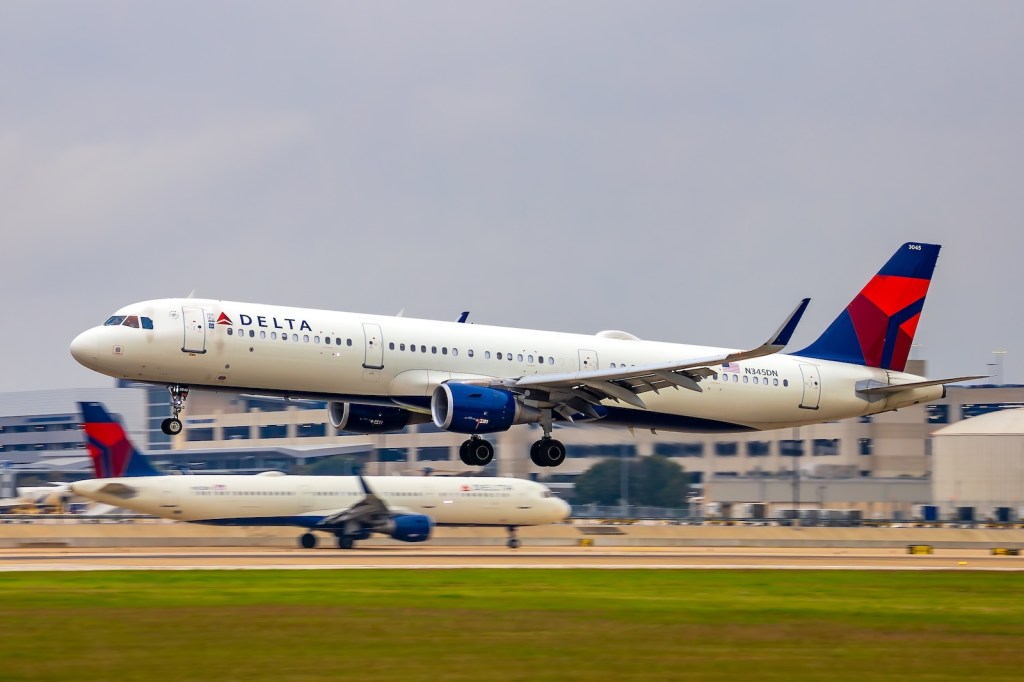
“Austin’s facility is bursting at the seams as it stands,” he added.
Bouwman said additional gates would be needed before Delta could reach its intended scale in Austin.
“It’ll take probably some more time,” he said. “Once we’ve got the gates and all that stuff [in place],” Delta can get where it wants to be.
More Premium Seats
The A330-900neo was not necessarily Delta’s preferred aircraft configuration for the Paris market.
“I would prefer a different cabin configuration than the current [A330neo],” Bouwman said. “It doesn’t have enough business class seats.”
Delta’s A330-900neo configuration includes 29 Delta One suites, 28 Premium Select seats, 56 Delta Comfort seats, and 168 economy seats.
Bouwman said the aircraft was what Delta could fit into its planned fleet rotations for 2027. Despite its size, the airline determined that the broader market available through Paris could support it.
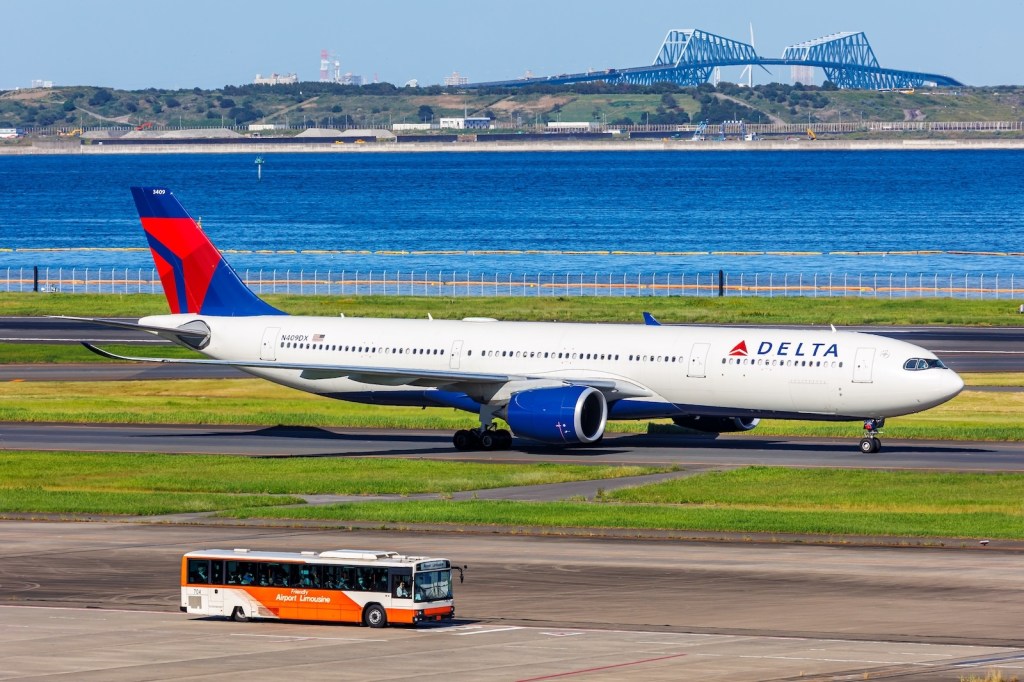
“It’s a big airplane,” he said. “But the market from Europe and from India and Middle East-Africa – we’re talking about almost 1,500 PDEW. So we only need to get a portion of that in order to fill it up.”
Delta also chose daily service instead of a less-than-daily schedule to remain relevant to corporate travelers.
“We want to be daily because we want to be relevant for the corporate traveler, particularly in the shoulder periods,” Bouwman said, pointing to stronger corporate travel in April and May than during July and August.
The route will initially operate during the summer season, but Bouwman said the long-term goal is year-round service.
“If you’re talking about winning in the corporate [market], to not be there in the winter, that’s going to be a big challenge,” he said. “Eventually, I would like to get this market year-round.”
Asia Is On the List
Paris may not be Delta’s final long-haul addition from Austin.
The airline has also examined service to Seoul Incheon, one of Austin’s largest unserved international markets. Such a flight would connect two major technology centers and feed into Delta’s joint venture with Korean Air.
Aircraft availability, however, presents a more difficult hurdle.
Bouwman said an Austin-Seoul flight would require an Airbus A350 capable of operating the approximately 14- to 15-hour mission. Delta does not currently have an A350 available for Austin without taking it from another route.
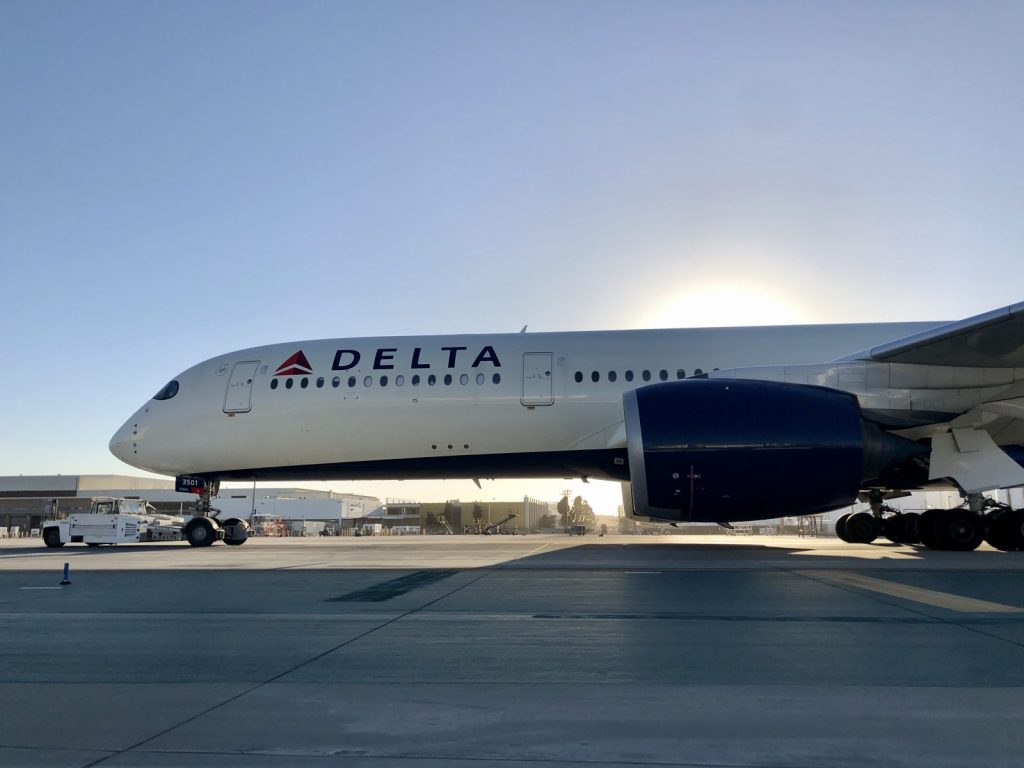
“I really don’t have any of those available without canceling something else to fund it,” he said.
Paris is easier to add because it does not require the same ultra-long-haul aircraft capability.
“Incheon is something, of course, we’re looking at as well,” Bouwman said. “But it’s just a little bit more expensive to make happen.”
A $5 Billion Airport Expansion
Delta’s ability to grow in Austin is tied closely to Austin-Bergstrom’s planned expansion.
The airport and its airline partners finalized agreements in January supporting a program now expected to cost more than $5 billion. Plans call for 32 additional gates through a new 26-gate Concourse B and a six-gate interim facility known as Concourse M.
Austin-Bergstrom will also redevelop the existing terminal into Concourse A and construct a new arrivals and departures hall with expanded ticketing, baggage claim, and security facilities.
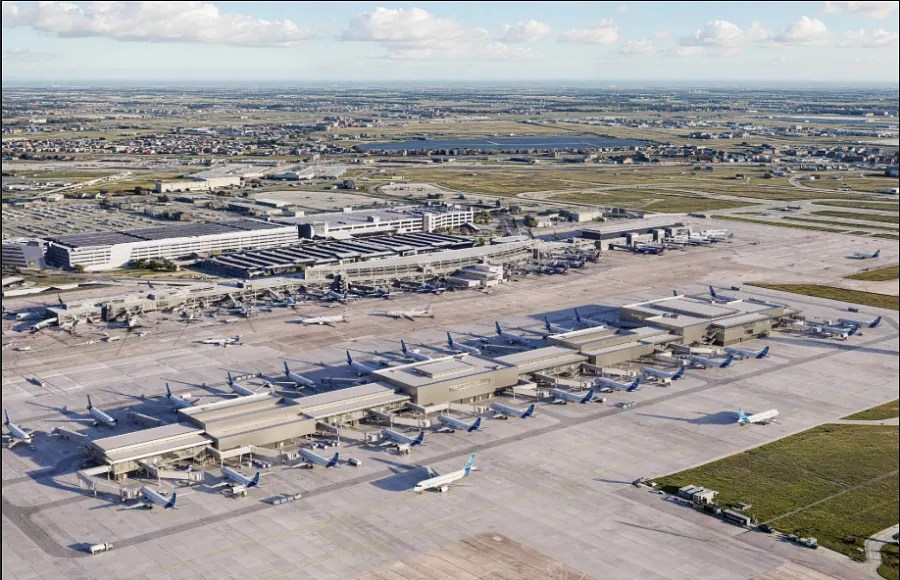
Delta will become the anchor tenant in Concourse A with 15 gates. American has been allocated nine gates, while Alaska will have one. Eight common-use gates in the concourse will be capable of handling both domestic and international flights.
Southwest will anchor Concourse B with 18 gates, while United will have five. Three gates will be available for domestic common use.
Delta also plans to open a second, larger Sky Club as part of the redevelopment.
Paris will serve as an early test of that next phase. If the route matures into year-round service, it could make additional international flying easier to justify.
“Europe is usually where we start with these types of focus cities,” Bouwman said. “Paris and the Air France connecting complex makes this relatively straightforward, and then we’ll kind of see down the road what we can make happen in other regions.”


