

The last version of the mighty DC-8 still flying passengers was operated by Samaritan’s Purse, a Christian humanitarian organization that flies missions around the world, bringing aid to those in need.
The organization retired the type almost a year ago, meaning the only other examples still flying are used for cargo.
But with just over 500 built during its 14-year production run, the DC-8 was many airlines’ entrance into the long-range market, and one of the first jet aircraft to be used for commercial airline service.
What was it like flying on one of these aircraft? Read on, because AirlineGeeks got a special invite to ride on Samaritan’s Purse’s DC-8 on its last planned mission before its retirement.
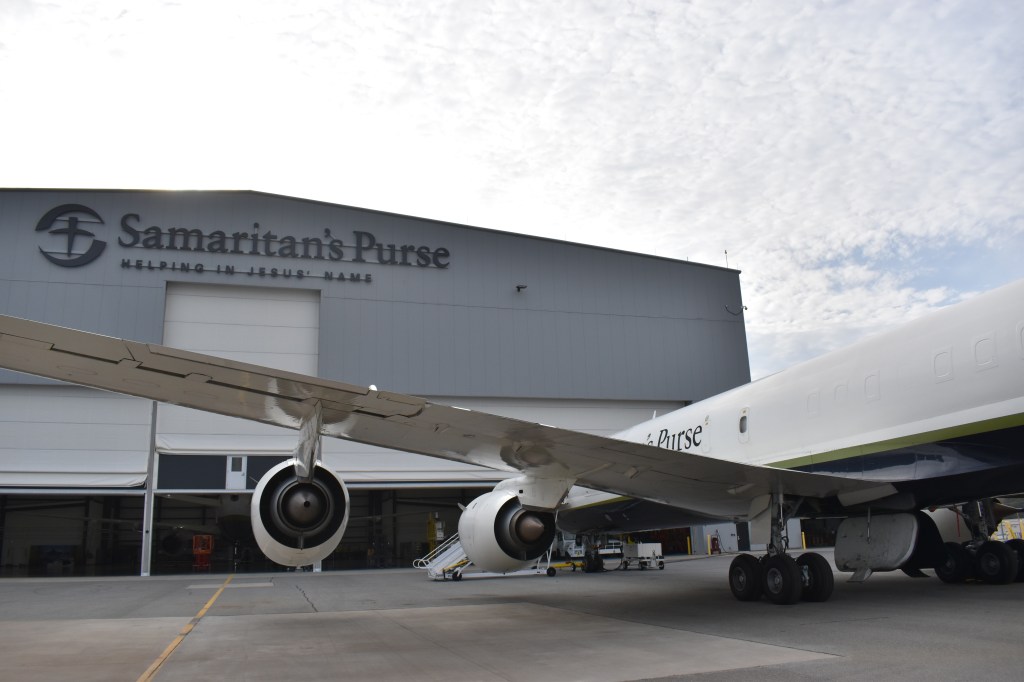
The final DC-8 to fly passengers of any kind, charter or otherwise, was N782SP, a DC-8-70 built in 1969 and originally delivered to Finnair, then transferred to the French Air Force in November 1981, Air Transport International in June 2005, and finally Samaritan’s Purse in March 2015. Since this trip was taken, the aircraft was gifted to Liberty University in December 2025 and is on display for all to see.
Day of the Trip
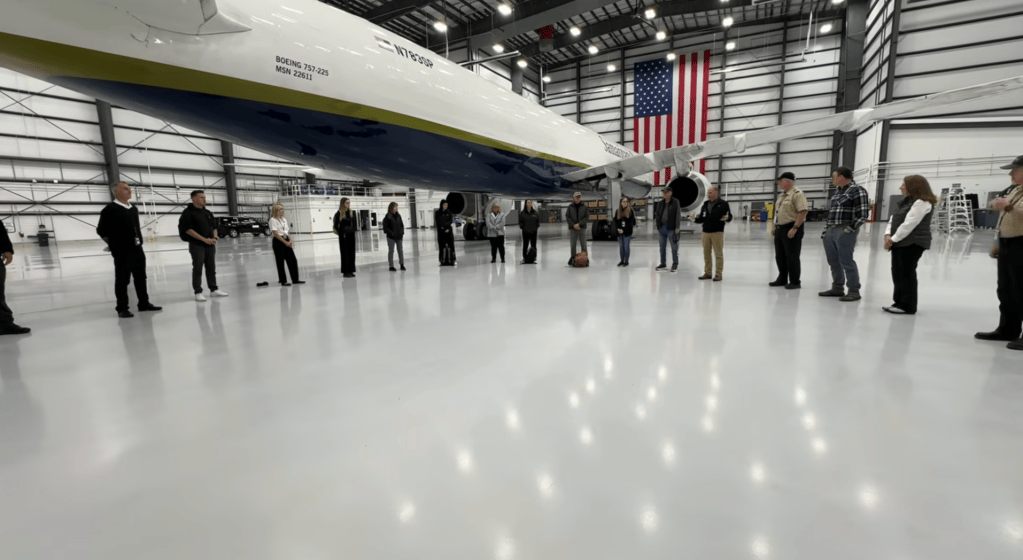
The day started early, with a departure from Samaritan’s Purse’s base in Greensboro, North Carolina.
Before calling us to board the aircraft, the Samaritan’s Purse team said a group prayer, as they do before every flight, and we were able to participate, which was a true honor.
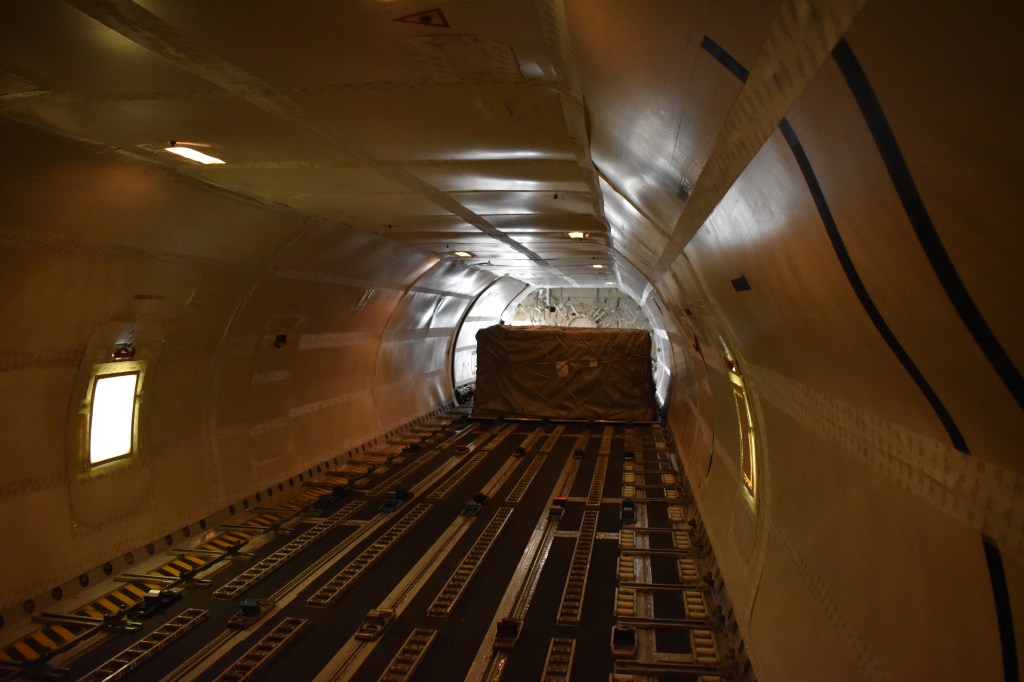
The passenger cabin of this aircraft was certainly something to see. Since the organization does a lot of humanitarian relief missions with supplies, most of the aircraft is configured for cargo.
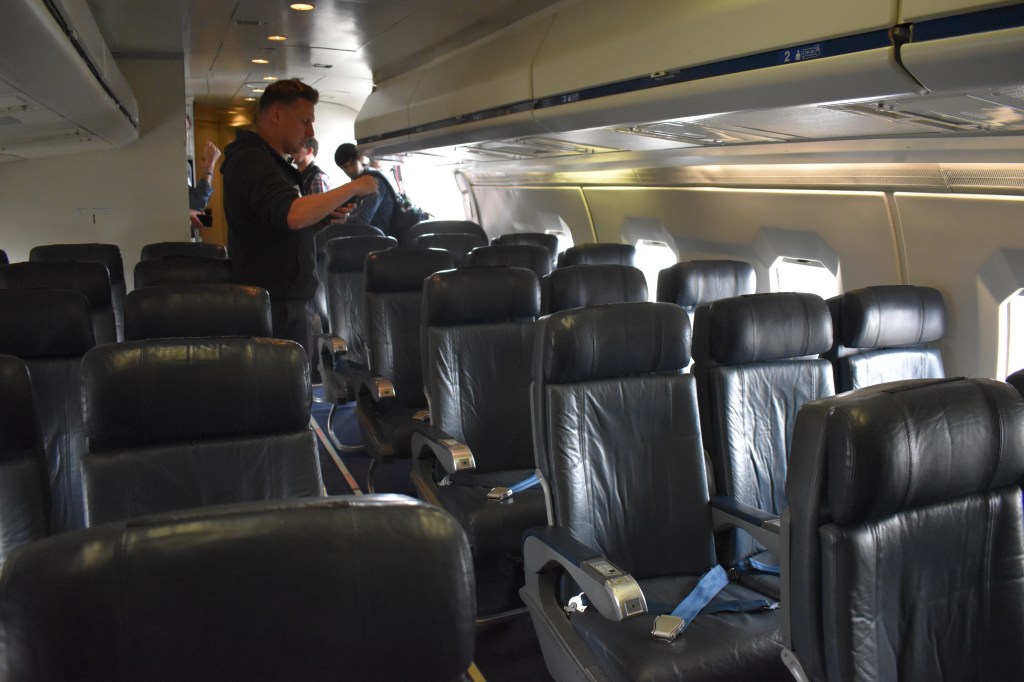
The rear part of the aircraft has 32 passenger seats, along with flight attendant seats, as this is a flight with passengers and they still have to follow the FAA rules for charter flying. The cabin was in a 3–3 configuration, except for the last row, which had two seats that resembled older domestic first-class seats.
The flight consisted mostly of volunteers from the organization that were going to the Mission Aviation Day event in Daytona Beach, Florida, except for myself and a very small number of aviation enthusiasts. AirlineGeeks was the only publication from the United States on board this historic flight.
I, of course, made sure to get a window seat for this amazing flight, and I made sure to grab one on the right side, as I didn’t want to be facing directly towards the rising sun.
The flight attendants did their safety briefing, and the four CFM engines on this DC-8 roared to life.
As we were taxiing out, even though the weather wasn’t the greatest and it was still dark out, it was still really amazing seeing the silhouette of the DC-8 wing against the lights of the airport from inside the passenger cabin. I never thought I would fly on one of these planes as a passenger, as I grew up in a time when this aircraft type had already been pretty much completely retired from most passenger airlines.
We then rocketed off the runway, bound for Daytona Beach.
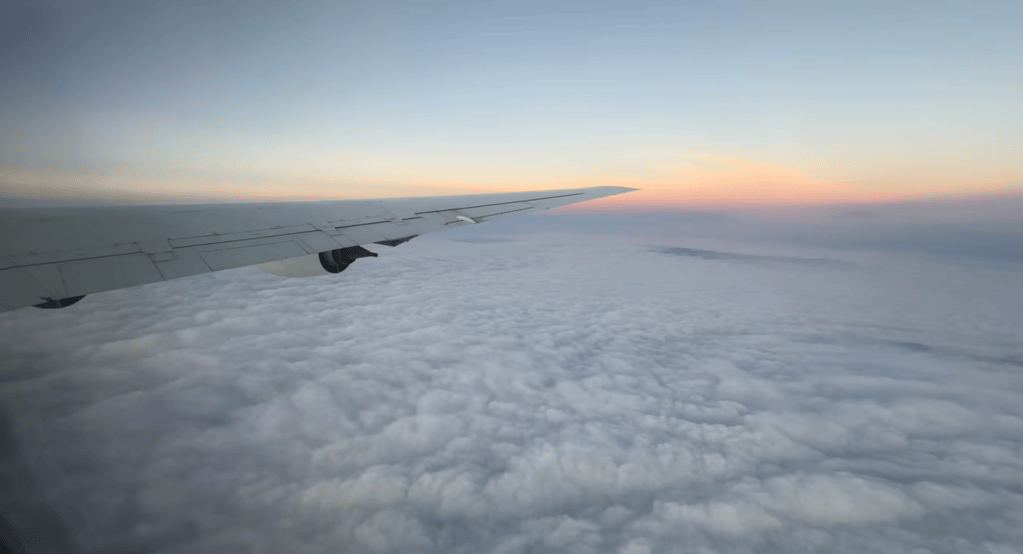
As we climbed up to our cruising altitude of 32,000 feet, we finally broke out above the clouds, and the sky turned to a wonderful yellow color. It was so amazing being on the aircraft, and it was actually not as loud as I thought it would be, although the plane doesn’t have the original Pratt and Whitney engines it had when it was delivered to Finnair back in 1969.
Once at our cruising altitude, I and the other journalists/aviation enthusiasts on board got up and began to explore the many unique features of the DC-8. Along the way, there was actually a power outlet and a USB port, which I’m 100% sure are not original, given the USB port was invented in the mid-90s, and the plane type was taken out of service by most commercial airlines in the early ’90s. But the outlets were needed, since this plane has gone to destinations far away and the volunteers in these seats need to charge their devices somehow.
The safety card was another unique aspect of the aircraft, and probably the last of their kind. The cargo also looked somewhat similar to those on Alaska Airlines’ former 737-400 combis, as it had a cargo section on the safety card just like this DC-8 did.

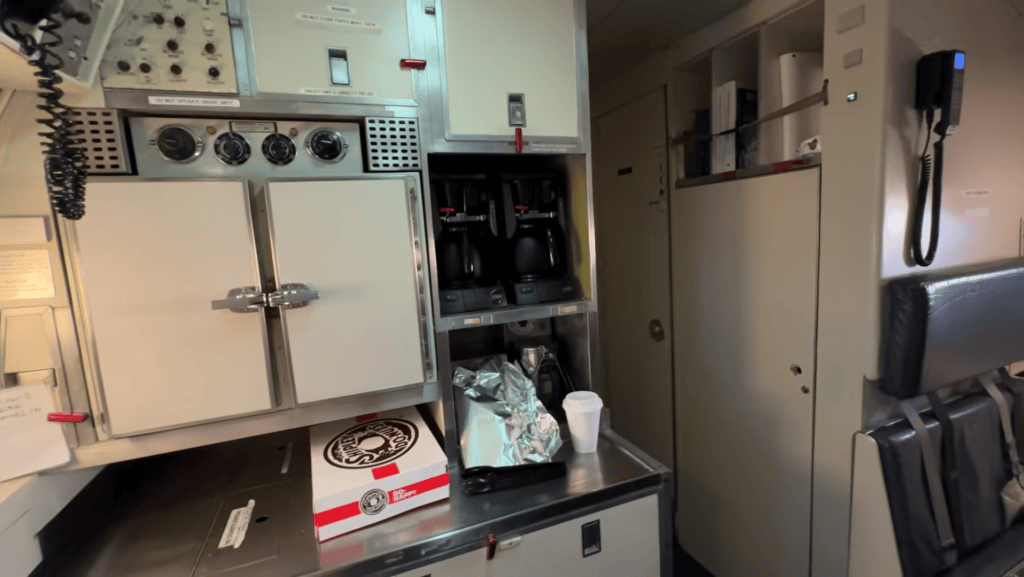
Given this aircraft was going to be on display for Mission Aviation Day when we got down to Daytona Beach, they didn’t hand out snacks in order to keep the cabin clean, but we did get small water bottles.
The aircraft didn’t do regularly scheduled commercial flights for Samaritan’s Purse, only humanitarian flights, so the cabins were not regularly stocked.
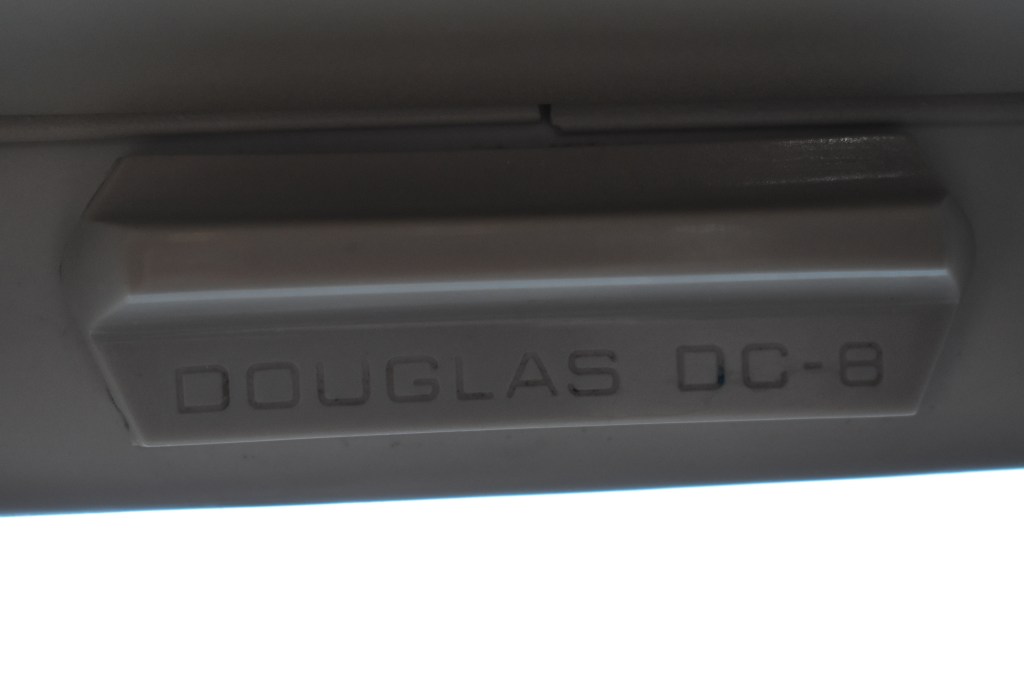
On the window shades, there was small lettering on the handle that said “Douglas DC-8,” similar to how on American’s former MD-80’s the shades said “McDonnell Douglas.” It was cool seeing that small touch, as it was just something else that made this aircraft unique and special.
It was really nice talking with the flight attendants, especially since they were going to be the final DC-8 flight attendants anywhere in the world.
This DC-8’s first mission with Samaritan’s Purse was back in 2015, when it flew down to Ecuador following a massive earthquake. Since then, it has flown over nine million pounds of cargo in over 210 missions. The plane is configured for 32 passengers, as mentioned before, but it can also carry 74,000 pounds of cargo, plus flight attendants, pilots, and a flight engineer.
One of the flight engineers of this DC-8, Joe Proffitt, had something nice to say about this aircraft: “It is my belief this DC-8 has been in God’s plan from its inception. Born on Christmas Eve and resurrected from a desert graveyard, the Mighty DC-8 has been His instrument, taking the Gospel message of Jesus Christ throughout the world, providing physical relief and spiritual hope to millions of people, wherever it touched down.”
The organization is perhaps best known for Operation Christmas Child, which sends gift-filled shoeboxes to children around the world.
Obviously there was no Wi-Fi or IFE on board the aircraft given its age, but that didn’t matter since we spent most of the time talking and exploring the plane.
As we neared Daytona Beach, I returned to my seat. The sun coming up over the horizon definitely made for some great shots and memories of the DC-8 that I won’t forget.
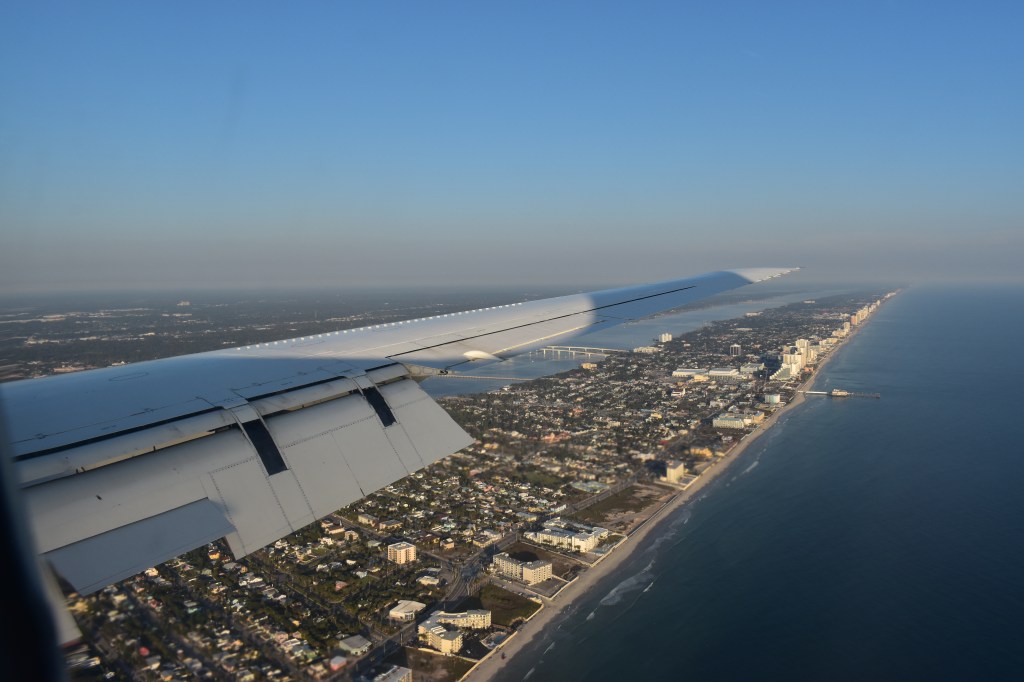
We then made a smooth touchdown at Daytona Beach around 8 a.m. local time, after just over an hour of flight time from Greensboro.
As we pulled into Mission Aviation Day, there was already a line of people waiting to get a view of the aircraft.
I was so fortunate that I was able to be a part of this flight on the final planned mission of the DC-8. After a wonderful couple of hours at Mission Aviation Day at Embry-Riddle Aeronautical University, I made my way to the passenger terminal for my flight home; I was unable to make the return flight with the plane due to some other things I had planned, although I heard from the other passengers the only difference going back north to Greensboro is that they had snacks on the flight.
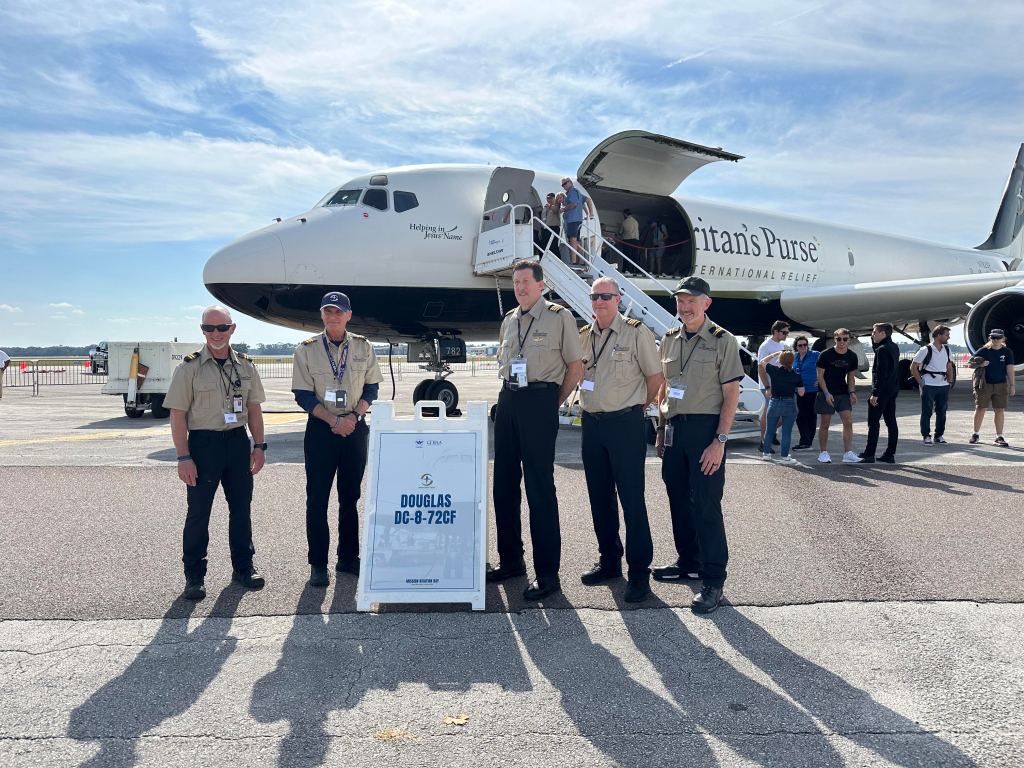
Throughout the article, I did say last “planned” mission, as they did end up using the plane two more times after this event for humanitarian reasons, before its retirement the next month at Liberty University.
As someone on the relatively younger side age-wise, I have zero memories of this plane ever flying passengers, and before showing up in Greensboro, I had never even seen a DC-8 in person other than on display at a museum, so getting to not only see one, but to then fly on it as a passenger was such a special opportunity. A huge thank you to Samaritan’s Purse for giving us the opportunity to do so.
Readers looking to learn more about Samaritan’s Purse can do so here.
To see a video account of this flight, the trip report can be found below.
Samaritan’s Purse provided AirlineGeeks with a seat on this flight, and AirlineGeeks gets no kickbacks or revenue from you clicking on or donating to their causes.


